We can't find the internet
Attempting to reconnect
Something went wrong!
Attempting to reconnect

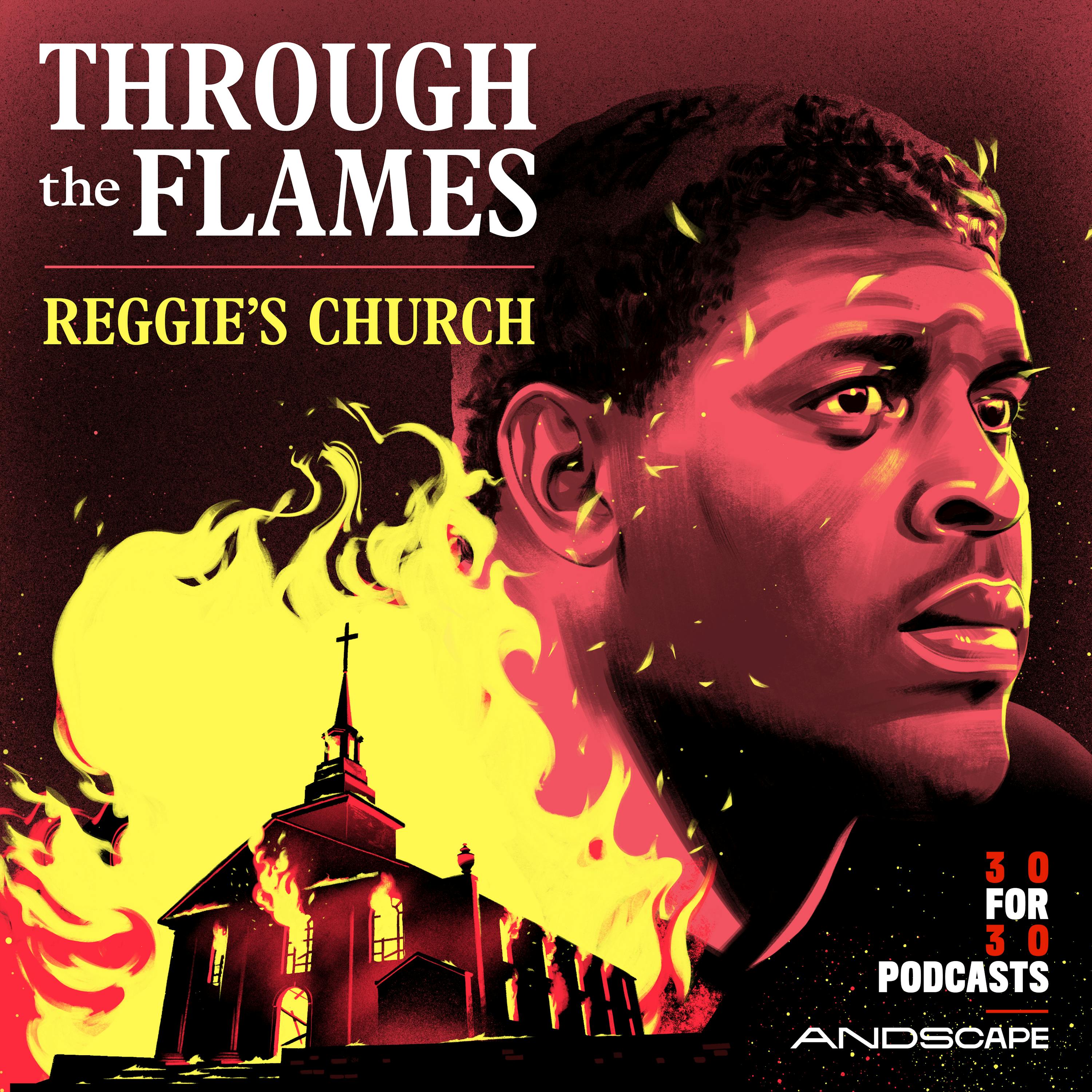
This podcast episode delves into the tragic burning of NFL Hall of Famer Reggie White's church, the Inner City Church in Knoxville, Tennessee, in 1996. Before gaining national fame, White was beloved in Knoxville both as an exceptional University of Tennessee football player and as an associate pastor, earning him the nickname 'The Minister of Defense'. The church's destruction was a significant event, pointing toward racial tensions in America, with racial slurs found on the building indicating a possible hate crime. The episode explores the investigation led by the NFL Films producer, Cortland Bragg, into the fire's cause and its broader implications, including racial discord and the struggles faced by African American communities in Knoxville. Despite suspicions around the Upton brothers, who were associated with the church, and a potential financial motive given the church's dire funding issues, the case remains unsolved. The episode highlights the complexities of investigating arson crimes and the challenging racial dynamics in 1990s Knoxville. Reggie White's response to the arson, transforming into an activist role and pushing for legislation to combat church burnings, underscores his legacy beyond football.
ESPN Tournament Challenge is here.
And guess what?
I'm doing my bracket right now.
Making picks, predicting upsets, winning my bracket group,
and leaving my old life as a part-time voice actor behind.
Hey, you never know.
And if I can do it while recording this awesome commercial, you can too.
Anyone can bracket.
Download the ESPN Tournament Challenge app to play the number one bracket game.
Presented by Allstate.
A word of warning.
The following episode contains racial slurs.
All right, 35, 36, skyline.
Late in 2023, I was in Knoxville, Tennessee,
looking for the site of NFL Hall of Famer, Super Bowl champion,
and NFL legend Reggie White's church.
Before Reggie White became a household name across the country playing pro football,
he was already famous in Knoxville.
He put the fear of God into his competition
while he played football at the University of Tennessee.
He was a man among boys.
He was a man among boys out there on the college football field.
Waiting, looking, being pursued.
He's stopped by Reggie White.
But he also preached the word of God in his free time.
That's why they started calling him the Minister of Defense.
I've always done my best to honor the name of Jesus.
He used to have a church in Knoxville.
But one night, the church was violently destroyed.
There's no 35, 36.
Huh.
The address of the church doesn't exist anymore.
The numbers skip, like the church was never there.
So I knocked on the door closest to where Reggie's church used to sit.
Hi, how are you?
Hello, I'm good. How are you?
A Hispanic couple opened the door.
They looked a little confused, but they were smiling and willing to talk.
How y'all doing?
Good, how are you?
I'm doing well. My name is Cortland Bragg.
I'm a producer for the NFL.
We're doing a story on Reggie White.
Have y'all ever heard of Reggie White?
He used to play for the Green Bay Packers.
He's from Tennessee.
Oh no.
No, you know that we're not football.
Okay.
He used to be a preacher at a church that actually stood on this land that in 1996, unfortunately, was arsoned.
There was racial slurs on the building when it got burnt down.
It became a big thing.
The FBI got involved.
The ATF got involved.
Bill Clinton got involved.
He was the president at the time.
So the land that your house is on,
it was a flashpoint for racial tensions in America.
Oh my God.
My name is Cortland Bragg, and I'm a producer at NFL Films.
I grew up not too far from Philly in South Jersey.
Around here, Reggie White's name still carries respect from his days as an Eagle.
There's Reggie White.
Buddy Riott says he's the best defensive player he's ever had.
A Hall of Fame player, a Hall of Fame person, I think that's more important for everybody to understand,
let alone the All-Star.
Time sack leader when he retired.
Reggie White was named to 13 Pro Bowls.
Sets the record for most sacks in a Super Bowl game, and more importantly,
gets his first Super Bowl ring.
The man who wore his faith as proudly as his jersey.
You know, when you hit your knees tonight,
thank the man upstairs for putting an NFL reverend here on earth for 43 years.
And I'm a preacher's kid.
My dad is a preacher, and so is his dad.
The faith community is our home.
So last year, when I was directing the Minister of Defense,
ESPN's 30 for 30 about Reggie White, and I learned that his church was burnt down,
I'm not gonna lie, I was blown away and decided to make a companion podcast.
From 30 for 30 podcasts and Enscape, this is Through the Flames, Reggie's Church.
The name of Reggie's church was the inner city church.
People refer to it as Reggie's church because he was an associate pastor there.
And when Reggie became NFL royalty in the 1990s,
and attached himself to inner city, he brought much more than just the occasional sermon.
He brought his star power.
Now remember, this was before social media.
Reggie brought his followers.
While inner city was primarily a black church in a black neighborhood,
the church brought together a racially diverse congregation.
What do I mean by black churches?
Obviously, religion doesn't have a color.
When people talk about black churches and white churches,
they're really talking about the racial makeup of the congregation or the church leadership.
At inner city, we're not talking about the racial makeup of the congregation or the church leadership.
The church is a part of the interfaith community.
We're talking about the interfaith community, not just the church.
That's what I mean by a black church.
I'm a believer and that's why I'm a believer.
I'm a believer.
I'm a believer.
At Inner City Church, you had blacks and whites worshiping together in Knoxville, Tennessee.
A big reason for that was the charisma and appeal of Reggie White.
And then in 1996, someone burnt Reggie's church down to the ground.
In only a matter of moments, this quiet East Knoxville neighborhood church was no more.
The main sanctuary consumed in flames when crews arrived shortly after 4 this morning.
Could this fire be related to four other church burnings in West Tennessee?
Or was the bomber striking back at the growing number of interracial couples here?
Investigators aren't ruling those theories out.
ATF agents will be back out here in the morning to take a look at what's left.
Meanwhile, the Knoxville Fire Department is keeping a 24-hour watch to make sure no one tampers with the evidence.
Reggie White, who's a defensive end for the Green Bay Packers,
says that the fire bombing of his church in Knoxville, Tennessee this week
was the work of racists who may have been trying to hurt him.
Just seeing the old news footage of Reggie talking,
talking about it, it sparked something in me.
I'm getting tired of him. We're doing our best.
You know, it's more than doing your best.
You got to find out who's done it.
It's my job to tell sports stories.
But this is different.
This story is personal for me.
I guess in a way, he kind of reminds me of my dad.
I didn't do it my way.
I tried to make sure I did it God's way, the way he would have me to do it.
When I get out the field, I'm a husband.
I'm a father.
When I have the opportunity to share the gospel, I'm a preacher.
I watched my dad build his church.
And I know firsthand the type of work you got to put in,
trying to acquire a building, trying to recruit and save souls
and get people from the community to serve in your church.
Building a church is building a movement, a movement for good.
I never had the opportunity to meet Reggie White,
so I never had the chance to ask him.
But it seemed like, as I reflect,
that's the same legacy that he was trying to build.
He was trying to do God's work.
And then, in one night, the symbol of all that hard work,
goes up into flames.
I look at it this way.
We must be doing something right for someone to burn up a church.
I believe that out of every bad thing that happens,
something good is about to happen.
I'm one who believes that when the devil does something like that,
that means God is getting ready to do something supernatural and spectacular.
It didn't sit right with me.
And I wanted some answers.
So me and a team at NFL Films started doing some digging.
But what I found was more complicated than I ever could have imagined.
My name is Philip Durham.
I go by Phil.
In 1996, Phil worked in Knoxville as a special agent
for the Bureau of Alcohol, Tobacco, and Firearms, the ATF.
Church fire happened January 8th, 1996, early Monday morning.
Phil had arrived just as a local fire department was getting the fire under control.
But there was significant damage to the sanctuary.
The roofs and most of the structure,
to the sanctuary portion, was collapsed.
I remember one brick wall was still standing, but it was very unstable.
As soon as we went into the back portion of the church,
the floor was covered in liquid.
We quickly found out that we were walking around in gasoline and kerosene.
Very, very strong smell.
It was probably at least a half-inch thick of liquid
that we were walking through downstairs.
You know, you walk around all that fluid.
That's a scary aspect right there.
As Phil's team walked downstairs,
they found a bunch of bottles with rags,
sticking out of them.
Of what you would, or what most people would call Molotov cocktails,
none of these Molotovs were thrown anywhere.
They were all standing up on tables,
which was very unusual.
You know, just looking at it going in, we thought,
this was amateurish.
Just having all these Molotovs sitting on the table
didn't make a lot of sense.
They had been overfilled with the gasoline and kerosene,
and it basically washed away any potential fingerprints or DNA
or anything else that they had gotten off of those bottles.
Phil's team suspected that maybe someone started the fire upstairs,
and they had to run before they got around to using the Molotovs.
People don't realize if they pour liquids into a building
that have, you know, good oxygen flow,
and they light a match, that thing's going to go up there.
It flames really, really fast.
It probably scared them away at that point.
They never got to finish what they were doing.
And then we also saw the racial slurs on one of the doors
on the other side of the building.
And then we also saw the racial slurs on one of the doors on the other side of the building.
on the side of the church.
The slurs said,
Die niggers, and die nigger lovers.
A typewritten letter was also found at the site of the arson,
saying that, quote,
1996 shall be the year of white triumph
and justice for the master supreme race.
The letter expressed that they would no longer tolerate integrated communities
and, quote,
detractors of the white master race.
The letter was signed,
skinheads for white justice.
Church members believe the firebombing was an attack on their church,
which is known for its interracial congregation.
Agents say that doesn't necessarily mean this was a hate crime.
So we don't know if that was there
or if it might have been put there as a disguise
or some way to deflect suspicion in a different direction.
Man, was this 1996 or 1956?
At the time of the fire,
Reggie White and the Packers had just beaten the 49ers
in a divisional round of the playoffs.
Steps up and he gets hit.
Oh, wow.
And the ball goes down.
He was throwing, says the official.
And Young is slow in getting up.
He was hit by Reggie White.
But Reggie barely had a chance to enjoy the win.
Two days later, he got a phone call telling him
that his church in Knoxville had burnt down.
Around the same time that Reggie found out about his church burning down,
America was finding out that many other churches were burning too.
First there was one fire, then there was another, then there was another.
Gary Fields is a reporter and editor for the Associated Press.
But back in 1996, he was at USA Today.
Gary and his team at USA Today,
they built this national database of church fires.
That database became the gold standard.
I'm not going to say we had every church fire in America,
but I think our list and the database that we built
was a little bit more definitive than what most other organizations had.
And at one point, I knew we were doing pretty well
when we were doing pretty well.
And I knew we were doing pretty well when we were doing pretty well.
And I knew we were doing pretty well when we were doing pretty well.
And I knew we were doing pretty well when we were doing pretty well.
I got a phone call from the ATF,
and they were asking,
hey, do you mind if we actually start using your list a little bit?
Gary had been calling around,
asking state fire marshals about church arsons
and scanning local news reports of church fires.
And what he found shocked him.
We weren't asking for black houses of worship,
or white, or mosque, or anything.
We said, give me anything that is a house of worship.
That's when it became evident that,
this was something that we were doing to all houses of worship.
All houses of worship were burning,
but black churches were burning at highly disproportionate numbers.
In 96, the black population in the United States was about 13%.
But more than half of the church burnings were black churches.
There was 945 of these incidents over the course of five years.
500 African American churches,
you know, compared to roughly about 400 white churches.
That's going to be disproportionate, period.
There were a lot more white suspects arrested than black suspects.
The black church had been on the front lines combating racism
all throughout American history.
So an attack on a black church,
if racially motivated,
hits a little different.
First off, if it was black churches or African American churches,
it is exceptionally significant.
It's the top of the pyramid in the community.
It was the center of organization.
The entire civil rights era was built around being able to use churches.
The Reverend L. Roy Bennett and the Interdenominational Alliance
organized what is commonly known as the Montgomery Bus Boycott.
In Montgomery, you will find at times Negroes riding the bus,
standing from halfway the bus to the back of it with one white passenger,
perhaps sitting on the 10th seat.
And 15 or 20 Negroes standing from that seat to the back of the bus.
We're asking that that seating arrangement be changed.
The March for Voting Rights, from Selma to Montgomery,
started at Brown Chapel AME Church.
Then if they don't listen once more,
we will dramatize this whole situation and seek to arouse the conscience of the federal government
by marching by the thousands on places of registration,
and to have dis pancake forums�
so that you understand what I mean.
Theáo and I were...
Grownups.
When they're three years older,
I know to face race problems.
The
res Yay,
went from what I can't imagine Health Programs
to announce our
annual
Catholic
event.
knew because of the fires and things back then, if it became evident that you were really
using the church too much, then things would happen to those churches.
And that's really what led to the bombing of the 16th Street Baptist Church.
The governor of the state of Alabama has to take a great deal of the responsibility for
this evil act, for his defiant, irresponsible words and actions have created the atmosphere
for violence and terror all over this state.
The bombing of the 16th Street Baptist Church in Birmingham is one of the most infamous
terrorist attacks of the civil rights movement.
In September of 1963, the Ku Klux Klan bombed the church, murdering four little girls.
This was just one of over 100 black churches that were firebombed between 1954 and 1968.
Gary's investigation into the church burnings in the 90s found that racism was often involved,
but sometimes it had nothing to do with racism.
There was racial animus in some of them.
There were teenagers in some of them.
There was one gentleman who I think burned 28 by himself, and his wasn't racial hatred.
His was religious hatred.
So it was for a variety of reasons that these things were actually burning.
There were cases where pastors burned churches down because they wanted new churches.
A pastor burning down their own church?
For me, the first time I heard that, I was taken aback.
But Gary clearly did his homework on church burnings across the country, including Reggie's church.
It doesn't surprise me at all that Reggie made it a point to shout out Gary.
I want to thank one guy here, Gary Fields from USA Today.
He's one of the first people to visit the sites.
And the fire, what was going on?
At the beginning of 1996, black church arsons weren't really a part of the national conversation.
But because of Gary's reporting and the fire at Reggie's church, it became one of the biggest stories in the nation.
And we talked about, you know, other church fires across the country.
Former ATF agent Phil Durham.
What their motives were, who was doing it, you know, what potential suspects they had on those fires.
We would look at, do they have any relationship to anybody in Knoxville?
And did we have hate groups operating?
In Knoxville, you know, people were pointing the fingers.
And I know Reggie White pointed the fingers a lot.
Racial groups, hate groups.
Is it a feeling among you and the other pastors that there is a racial conspiracy going on?
Well, yes, it is.
I mean, in particular.
You don't believe they're isolated incidents?
Well, no, I think that they've got to be connected some kind of way.
There's a long history of white supremacist groups operating in Tennessee.
Reggie and his wife, Sarah, had their own personal experience dealing with the KKK.
Reggie and I built our home that we thought we would be in in Tennessee, where we were going to stay.
All right, you ready?
Whoa!
When we were preparing to move in, there was a wooden cross against our house.
We didn't know that we had KKK people living across the yard.
The Ku Klux Klan was founded in the city of Pulaski, just four hours west of Knoxville.
In just a year...
A year before Reggie's church burned down, three white men were convicted of burning down several black churches in Tennessee using Molotov cocktails.
But Phil says the ATF had a hard time connecting the inner city church arson to any known white supremacists.
There were some white supremacists in the area, but we knew who they were, where they were.
We ran that as far as we possibly could, and we could not tie anyone to any aspect of that.
I understand why the ATF would be investigating groups.
But what if it wasn't a conspiracy?
One thing I learned from Gary's research was that sometimes all it takes is one hateful person to devastate a community.
You don't have to join a white supremacist group to commit white supremacist crimes.
In 2015, Dylann Roof shot up a black church all by himself.
Yeah, he was a white supremacist, but he acted alone.
I think it's safe to say that the initial investigation was frustrating for everyone.
But Reggie's frustration was different.
It was so public.
He was one of the most famous people in the country, and we could all watch him on our televisions.
I'm telling you, though, I'm not happy about this game.
I'm not happy because I hear the official tell me that I'm lying too much.
If this was my dad, I think I'd know what he'd be feeling.
But I'm not sure what he would do.
What Reggie did was go on the offensive.
He publicly asked other black celebrities to join in solidarity.
I'm calling to the forefront.
My counterpart.
Athletes.
And I'm also calling entertainers.
The Oprah Winfrey's.
I'm calling in my field the Michael Jordans and the Emmys Smiths.
Our communities are being terrorized.
And we have to do something about it.
Reggie also called out what he saw as racial inequality in the investigation.
I'm also discouraged with how long it took for the media in this country to really accept it.
I must admit, I believe that if these were white churches,
I would have stopped at one.
This country didn't respond quick enough to me.
As Reggie was publicly bringing the racial tensions of the time to the forefront,
the ATF's investigation diligently continued.
As part of the investigation, we were going to local stores, local gas stations,
trying to determine if there was anything unusual,
if anybody saw anybody buying a lot of gasoline or kerosene or gas cans or anything of that nature.
And I actually found where,
an individual had purchased size to seven,
one and two gallon gas containers at the Walmart out of Deeson,
also closer to where the church was.
That purchase was, I believe, early Sunday morning, the day before the fire.
The ATF questioned the cashier at the Walmart and the cashier didn't remember who bought the gas cans.
But they did remember that there was another Walmart employee standing in line right behind the person who was buying the gas cans.
He was on break and he was purchasing a snack.
I found him.
And spoke with him.
And he actually told me that it was the pastor of the church buying the gas cans.
The pastor of the church at the time, his name was David Upton.
He and his brother, Jerry, founded the church.
They both preached there.
They were good friends of Reggie and a big part of why Reggie adopted inner city church as his own.
It was a week or so after the fire or sometime within that week of the fire.
He had seen the pastor on TV talking about the fire.
And that's when he recognized him.
And he said, I'm going to go to the fire.
He said, that's the person that was standing in line in front of me.
So Phil is telling me that this witness saw David Upton, the pastor of inner city church, buying all these gas cans the day before his church was burnt down by arson.
The Uptons burnt down their own church.
I know what it takes to build a church.
It takes years and a huge investment of energy and time.
Basically, the ATF's theory here is that the Uptons decided money was more important than money.
And that's why they built a church.
Money was more important than all of that.
The thought was that at least one of the Upton brothers were looking for an insurance payout.
According to what the Uptons later told a court, the insurance payout on the fire was just over $500,000.
And from the ATS investigation into the arson, it seemed like they needed the money.
So as part of the ATS investigation into the arson, they started looking into the church's finances.
We quickly realized that they were having financial problems.
The money wasn't there like they had said it was.
Inner city church was more than just a church.
It ran a loan program to help low-income people in the community buy homes and start businesses.
That part of inner city was organized by Jerry Upton.
And Reggie White had come to Knoxville to do the big press conference about donating a million dollars to that financial fund that the church oversaw.
And so we started looking at that money.
We actually couldn't track that money.
It came in.
It came to the church.
And we couldn't tell you where it went.
And we had a motive with the finances because they were struggling with the money.
They obviously had an opportunity.
Racism is one thing.
I've experienced it many times.
But a church leader, the head of a church burning down his own building, that would be wild.
I know from my reporting back then that it was a really sensitive investigation.
Because, A, it was high profile.
Gary Field from USA Today says people high up in the government started paying attention to the inner city church investigation.
It was something that then President Clinton and Attorney General Janet Reno and a whole bunch of other folks were watching closely.
And if you were a special agent on that one, you pretty much had to find somebody with a gas can in their hand in a match.
Because you wouldn't.
People weren't going to go out there with a circumstantial case.
That was exactly what Phil Durham thought he had.
A witness who said they saw Pastor David Upton at Walmart buying gas cans the morning of the fire.
But not long after telling Phil's agents that story, the witness had a change of heart.
I actually went to do a full interview and statement from the individual.
And the individual got scared.
Turns out the witness was a minor.
And he told me that his father told him.
Not to speak to us.
Not to get involved.
Not to cooperate.
So he refused at that point to cooperate any further.
After telling me that it was the pastor that was standing in line.
Also, there was no footage from any security cameras.
And whoever bought those gas cans paid with cash.
So there was no paper trail.
The ATF's hot lead was actually a dead end.
But Phil's team still felt that the leadership at inner city church was behind the arson.
And out of respect for Reggie.
They invited him to come talk about the case.
He actually came to the ATF office there in Knoxville.
He came in with his attorney.
Actually greeted him, walked him into the office.
It was because of his status.
One of the ATF deputy assistant directors actually came down from Washington to speak with Reggie that day.
Phil wasn't in the room.
But he remembers what the agenda was.
It was more trying to learn about his relationship and what he really knew about the Uptons.
Which he had known for several years.
So, you know, he was a little bit more familiar with the Uptons.
So, you know, he was a little bit more familiar with the Uptons.
So, you know, Reggie didn't have anything negative to say about the Uptons.
And really was not happy about us asking about the Uptons.
Because Reggie really supported and backed Jerry Upton.
Phil told us that everyone at the ATF really liked Reggie.
But they still weren't sold on his theory.
We did everything we could possibly do to look at anything racially motivated.
It just wasn't there.
We just could not convince Reggie otherwise.
Phil and other ATF agents we interviewed all told us the same thing.
As the investigation turned more towards the Upton brothers as suspects,
Reggie became more and more frustrated.
I'm getting tired of hearing we're doing our best.
You know, it's more than doing your best.
You gotta find out who's done it.
Those words, the conviction in Reggie's voice, I can't unhear it.
It's weird.
I feel like he or something is speaking to me.
I feel like he or something is speaking to me. We're still talking to the Uptons.
I feel like he or something is speaking to me. We're still talking to the Uptons.
I don't understand why they welcomed him as his brother?
He had Alcohol.
Would it have been better if the Crypto Bet on him had
gone?
2000, Jerry Upton was convicted of selling cocaine and illegal possession of a firearm.
Reggie died never knowing who burnt down his church, the Inner City Church. David Upton died
in 2015, but his brother Jerry's still alive, and he's out of prison now. As I reported this story,
I started to think that if I could talk to Jerry or talk to the right people in Knoxville,
that might, in some way, help Reggie. Maybe it could resurrect the legacy that the arson
tried to extinguish. I don't know. But before I decided to go to Knoxville,
I wanted to see if I could actually get Jerry on the phone.
Hello. Hello, Matt. Please speak to Apostle Upton.
Yes, you see. How you doing, Apostle Upton? My name is Cortland Bragg.
Who did you say you were with? I'm with NFL Films.
NFL Films. Okay. Yeah. Yeah, Reggie and I were very close.
I was surprised Jerry was open to talking to me.
He hadn't done an interview in over 20 years.
I first met Reggie when he was playing football for the University of Tennessee. He was in the 80s.
And, you know, he started attending Bible study that we were doing. Reggie, he just, he loved it.
And he loved the Bible. He loved the Word. And he just grew from there.
I don't have any hesitation in saying I loved him like he was my own.
I'm not sure what I expected Jerry Upton to sound like, especially with all the accusations against him and his brother.
But when I talked to him, he seemed very proud of what he accomplished at Inner City Church decades ago.
Knoxville was very segregated. There was a lot of racial barriers that had to be brought down.
Blacks worship only with blacks, whites with whites. And we broke through that barrier.
I think it fulfilled us.
We were a boy that was in the community. People felt at ease.
We're going to be coming down to Knoxville. If you had time, I would just love to see if I could just talk to you in person.
If I'm here, I'll be more than glad to meet with you and to let you see what Reggie's influence has done in Knoxville.
There's a deeper story to be told about Reggie's church in the city of Knoxville.
Something deeper than ashes and accusations.
I needed the perspective of those who lived and breathed the same air as the church.
I needed to go to Knoxville.
Cortland, where are we?
So we just arrived to Knoxville, Tennessee.
In October 2023, NFL Films producer Chris Wilson and I went to Knoxville.
We were there to learn more about Reggie White's church, the Inner City Church.
We were also there to speak with Jerry Upton, the former pastor at the church,
and the man who led the church.
The man the ATF believed had burnt it down.
I was looking forward to hearing what Jerry had to say.
But when I got off the plane, there was a text message waiting for me.
I had received a text message from Jerry Upton.
He texted me and said he would be unfortunately unavailable to interview this week.
He came down with an illness from a trip that he took overseas last week.
I like to think the best about people. Give them grace.
Maybe Jerry really was sick.
But Chris pushed back.
What do you think in your mind were the possibilities?
Yeah, I mean, your first thought is like, you got to be kidding me.
Like, we're already down here. We set up this interview.
Maybe he's just not interested and he's taking me on a ride.
You know, you never know.
I still have hope that we may be able to try to still convince or persuade him to sit with us and talk with us.
But right now I'm just kind of waiting to hear back from him.
Cool.
So right now, where are we headed?
Our first reporting stop in Knoxville was Honey Rock Victorious Church International,
Jerry Upton's current church, which he founded over a decade ago.
Even though Jerry wasn't feeling well, we hoped that Tuesday's services wouldn't be canceled.
Is this the church?
Who said that thrift store?
It's the Honey Rock Victorious Church thrift store.
Maybe it's over there.
Y'all ready?
Let's go.
Let's go.
Let's go.
Let's go.
Let's go.
Let's go.
Let's go.
Let's go.
Let's go.
Let's go.
Let's go.
Let's go.
Let's go.
Let's go.
Let's go.
Let's go.
Let's go.
Let's go.
Let's go.
Let's go.
Let's go.
Let's go.
Let's go.
Let's go.
There's a certain energy that surrounds a place of worship.
A mix of peace and power.
And that's what I felt when I walked up to Honey Rock.
As soon as we walked in the door I could feel the presence of the praise and worship team
playing music in the main hall.
On the walls of the church I saw pictures of the missionary work Jerry and his congregation
do in Africa.
Over the years, they've helped build churches and high schools.
They've helped dig wells for water and seeing the pictures really impressed me.
It kind of hit on my heartstrings.
It's the kind of work my dad wants to do.
After listening to the music for a bit, we stepped out into the main hallway looking
for someone to speak with.
And we saw this sharply dressed older man using a cane walk in through the door.
He actually walked past us.
Afterward, one of our producers, Jesse Alejandro Cottrell, asked another man who seemed like
he was working security if the older man we had just seen was Jerry Upton.
That's Pastor Upton?
Oh, yeah.
Oh, Pastor Upton.
Oh.
It was.
Jerry Upton was there.
But he didn't want to talk to us.
The recording isn't great because of all the music.
The man we spoke to told us that although Jerry didn't want to talk to us tonight,
if he said he'd speak to us, he would.
So we left the church and hoisted.
We hoped Jerry would talk to us before we left town.
But yeah, thank you so much.
What was your name?
Lawrence.
Jesse.
All right.
So we are heading to Diane Jordan's residence.
Diane Jordan is a former commissioner of Knox County and used to work closely with Jerry
Upton and Reggie White.
We thought that if anyone had insight into what was going on at Inner City Church in
the mid-90s, it would be Diane.
But we couldn't get her on the phone.
So we showed up at her door, hoping she would talk to us.
Hello.
Hello.
Hello.
How are you?
Diane, how you doing?
My name is Cortland Bragg.
I'm doing a story on Reggie White and his ties here to Knoxville and him being a preacher
at Inner City Church.
I just wanted to see if there's any chance I could maybe do a short interview with you.
Okay.
Diane took us to her kitchen table.
Above it, Chris noticed this picture of Diane from a couple decades ago.
It's a picture of her and her husband, and it's a picture of her and her husband.
And it's a picture of her and her husband.
And it's a picture of her and her husband.
And it's a picture of her and her husband.
And it's a picture of her and her husband.
So you were known in this around town as the most stylish?
In this picture from a local magazine, Diane is dressed up super stylishly in this cowboy
hat.
I never go out of the house without a—nobody's hardly seen me without a cowboy hat.
And it has to match whatever I have on.
So that's how my constituents know me.
You got to have a gimmick.
It was through her work with the community back in the 90s that Diane's path crossed
with Reggie White's.
She has fond memories of him.
Reggie was just a big giant to me.
You know, just a jolly green giant kind of person, you know.
Just fun to be around.
He enjoyed life.
He loved people.
Like I said, we thought a whole lot of him, and especially because he was to us like a
movie star.
Shortly after she became a county commissioner,
Reggie actually hired Diane for a job.
I got elected for county commissioner in 1994.
And so in 1996, Jerry Upton and Reggie White gave me a job working for Reggie's Bank.
What Diane is talking about when she says Reggie's Bank is the nonprofit loan operation
Jerry Upton ran, the one that helped people with low income get loans.
Diane was a public relations director and loan officer at the program.
I would take loan applications.
And it was for low income.
Or people that were kind of fell through the cracks and couldn't get loans anywhere else.
In our interview with ATF agent Phil Durham, he told us that the finances at the loan program
were mishandled.
But Diane, she's proud of the work the program did.
Small businesses don't have a place to get money like the larger businesses.
And so this was definitely a need.
And Reggie and Jerry Upton were in this together.
Reggie financed Jerry.
Reggie financed Jerry.
And Jerry, the one that helped us get this bank started.
We pressed a little further.
But Diane told us that she wasn't knowledgeable about the finances at the loan program.
All she could do was comment on how hard Jerry was working.
Jerry, like I said, was there every day trying to do whatever I'm sure to keep the
lights on or what.
What we found in our investigation was evidence that the loan program was extremely underfunded.
The government had promised millions of dollars in funding, but that never came through.
Reggie White promised to match the government's funding with a million dollars of his own
money.
the government backed out. It's unclear if Reggie ever gave any money to the program.
And so for the few years that it existed, the program was under-resourced. In the words of
one local journalist we spoke to, Diane and Jerry were trying to fund projects that would cost
millions of dollars, but they only had hundreds of thousands of dollars. The ATF suspected the
Upton brothers of embezzling the loan program's money. But to me, it seems possible the loan
program was promised money that never came through, and the Uptons were trying to make
the best out of a bad situation. And we heard so many things about Jerry Upton, a lot of bad things.
But talking to Diane was the closest we've gotten to someone who actually knew him personally.
Diane only had good things to say about Jerry.
Jerry was very easy to talk to, very likable person. He's a real down-to-earth Southern guy.
He seems to have such wisdom of the Bible, and he had a large following. I mean,
seemed like it just...
kept growing.
But of course, it didn't continue to grow. On a cold winter night in 1996,
Jerry Upton and Reggie White's church was burnt to the ground. I asked Diane how Jerry reacted to
the fire. I know it hurt Jerry. It really hurt Jerry because this was a dream of his that had
come true, and bringing all races and creeds together was something Jerry always wanted to do.
And he would come in and tell me,
talk to me. And it was just such a downer for him. It took a lot out of Jerry.
Given the racial climate, do you feel like people might have had a problem with that,
seeing whites and blacks fellowship together here in Knoxville?
Oh, yes. I'm sure they did. And I don't know if that's what caused the fire or what,
you know, but like I said, and it could have, because it's like Knoxville to me is still quite
racist even now, but definitely then.
It's always been kind of difficult for African Americans in Knoxville. I can remember growing
up here, we had colored bathrooms and white bathrooms when we would go downtown. I was like
six or seven years old, and I wanted to sit and talk to the bus driver, and they told me I couldn't
sit there, that I had to go to the back. On my job, you know, I never got promoted. They would
always help somebody come in and talk to me. And I remember, you know, I was a little bit of a
a young white girl come in, and I would have to teach her my job, and then they would promote her
to my boss. That's the one reason I got into politics, was because I needed a voice.
But once she got elected, Diane found out that some people didn't want to hear her voice.
She says that the treatment she received from some city officials went way past harassment.
Things got so bad for Diane that till this day, she still doesn't want to talk about what happened
to her on the record.
Did we have to have this on tape, this part I want off record?
Because I don't want to be attacked again.
As we talk more about the racial climate in Knoxville in the 90s, she says that she experienced
abusive treatment because she was a Black woman standing up for the Black community in Knoxville
against overt racism. What Diane told us off the record was horrible. It shocked me to see a woman
like Diane, a former elected official and a community leader, too scared to talk. From her
perspective, the racism was bad in Knoxville, and still is.
They got respect for the ATF, but they also had the skeletons in the closet, to say the least.
Gary Fields, the former USA Today reporter, says that many people didn't have faith in the ATF
because of these gatherings that some Tennessee ATF agents attended in the 80s and 90s.
They had been going to those good old boy roundups where there would be all kind of, you know,
racial and racist, you know, materials and stuff that was clearly out in the open.
Gary's not making up that term.
Good.
Good old boys roundup. That was the actual name of a yearly gathering of hundreds of local law
enforcement and ATF agents in Tennessee. These events were mostly segregated, with Black ATF
agents rarely ever invited. And the ones who did attend say they were openly called the N-word.
The good old boys roundup had been happening every year since 1980,
but it wasn't until 1995 that the news media broke this story.
It was a huge embarrassment for the ATF and even led to a congressional investigation.
I think we on the Judiciary Committee, to the extent we know about it, are deeply troubled.
That's Senator Orrin Hatch at a congressional hearing on the good old boys roundup in July of 1995.
According to news reports and our own investigations, some participants in at least some of the events
have put on racist skits, displayed blatantly racist signs, and sold t-shirts displaying,
among other things, a picture of an African-American.
The African-American man sprawled across a police car with the words,
boys on the hood.
The ATF agents I spoke to while reporting this story, including Phil Durham, claim
that the racist actions at these events were committed by a few bad apples.
There were obviously some things that occurred at those gatherings. Some of the bad things that
happened were not related to ATF or any other federal agency. It was some local law enforcement
officers that came in and actually, one particular individual,
actually caused problems. And ATF actually kicked him out, said you cannot be here, you have to leave.
And that particular individual didn't take it very well and actually hung signs,
racially motivated signs, on different parts of the campgrounds and took photographs
and actually released all of that himself.
But whatever actually happened, the good old boys roundup controversy was still fresh in
people's minds as the ATF investigated the arson.
At Reggie's church.
That really created some difficulties in terms of, A, the trust factor, you know, for the
African-American community because you're going to an agency that is now being associated with,
you know, going to one of these things where racial animus was kind of the order of the day.
Before leaving Diane Jordan's house, I had to ask her straight up if she thought Jerry Upton
or his brother could have burnt down Inner City Church themselves.
I never heard that.
Maybe I didn't hear because I would have not entertained that Jerry Upton and his people burnt the church down.
They wouldn't bring that to me.
They know she's not going to believe us anyway because that's not the character of Jerry Upton.
While there was reason to question the ATF's investigation,
there were also reasons why people might question Jerry and David Upton's character.
Earlier this year, Packer Reggie White received a check to help rebuild his church in Knoxville, Tennessee.
In the aftermath of the...
arson at Inner City Church, people and groups from all across the country
sent in donations to try and rebuild the church.
Back from the city of Green Bay, we'd like to present Reggie, I'm sorry, a check for $143,000.
You might see a big man cry right here in a minute.
People from the city of Green Bay, where Reggie played as a member of the Packers,
donated $143,000 for the rebuilding effort.
$100,000 came from the National Council of Churches, and Jesse Jackson's nonprofit donated building materials.
But the rebuilding never happened.
The money simply vanished, and the building materials Jesse Jackson donated were sold off.
Some suspected that Jerry and his brother, David, embezzled the money.
Others suspected that they merely mishandled it.
There isn't concrete evidence either way.
All right, one thing is if he doesn't answer, leave a voicemail.
It was our last day in Knoxville.
We were boarding a flight.
flight in a few hours. We still hadn't heard back from Jerry Upton, so I decided to try one last time.
All right, let's go.
The wireless customer you are calling is not available. Please try again later.
It went to voicemail, so I text Jerry to say we still wanted to talk with him.
Honestly, I didn't expect to hear back. But then, just as I was bringing the rental car around to
check out of our hotel, my phone buzzed. I ran back inside to tell my team.
All right, so got a text back from Jerry Upton that he will only be free from 1 p.m. until 1.30.
We got an address, so it was definitely a surprise because I had little hopes.
Hello. Hello. Hello.
Hello, gentlemen.
As our team walked up to the place where we were supposed to meet Jerry,
we actually bumped into him.
My name is Cortland Bragg.
Okay, I'm Jerry.
Jerry is an older man who uses a cane, but he has a lot of energy.
Again, he's well-dressed, this time in a well-pressed charcoal gray suit.
This is my church. This is my thrift store.
This is really amazing to see what you've done.
Everything seemed to be going well, but suddenly Jerry stopped walking and took a more serious tone.
Now, if this interview is going to be positive, I'm all for doing it.
If it's going to have...
Any negativity on my past, then I ain't willing.
So, break it down for me.
Okay.
Yeah, so we want to talk to you about Reggie White, so your relationship with Reggie,
as well as what happened as Inner City Church grew, and then unfortunately in 96.
See, I'm not willing to go into that anymore.
If you're recording...
Oh, I'll... Sir, I will stop recording, sure.
Just stop.
Sure, no problem.
In the end, Jerry Upton didn't want to talk to us with our mics on.
However, to our surprise, he did talk to our crew for over an hour.
I think he feels that church arson was a hate crime, and he's always felt that way.
But our investigation revealed that not everyone in the city of Knoxville agrees.
In regards to his past, I get the feeling he believes that he's already paid for the crimes that put him in prison,
and that God had redeemed him.
That was the reason he hadn't given an interview in over 20 years.
He didn't want to talk about a past he felt he was redeemed for.
I know some people might hear about his redemption and think,
he sounds like he's dodging.
But to my ear, it sounds to me as if Jerry believes his faith forgave him of his sins.
As for Reggie White, Jerry said that Reggie continued visiting him in prison right up until he died.
Since seeing him in Knoxville, our team has reached out to Jerry repeatedly on the phone and over text.
We've asked him to respond directly to suspicion that he or his brother,
burnt down inner city church.
To suspicions that he embezzled the rebuilding money, Jerry hasn't responded.
The circumstantial evidence that Jerry or his brother were involved in the arson of inner city church is as follows.
Upton's loan program was underfunded.
There was over $500,000 paid out by insurance as a result of the arson,
and hundreds of thousands of dollars were donated for inner city church.
Those funds were used to build a new church,
that never happened.
In addition to all of those funds not being accounted for,
Upton was using and selling cocaine during the years immediately after the fire.
However, a drug problem doesn't indicate his involvement in the arson,
but it doesn't help public opinion on his character either.
And then, of course, there is the witness who said that they saw David Upton buying gas cans at Walmart the morning of the fire.
But, on the other hand,
the witness never gave a formal statement,
and neither Jerry nor David were ever charged.
Also, white men with racist motivation burnt down multiple churches in Tennessee the year before inner city was burnt down.
For black people in Knoxville, the climate of racism in the 90s was very real.
The ATF had just been wrapped up in the Godot Boys scandal and the next year,
they're the ones investigating possibly the most high profile hate crime in the country at that time.
Not a good look.
We tried to verify that the ATF did their job,
did their best to link the arson to white supremacists.
But when we requested to see the case file,
an ATF representative responded that,
quote,
due to the fact that the incident for which you seek records occurred in 1996,
some of the records were eligible for destruction in 2016 or in the years following.
Case files have a 20 year retention period,
end quote.
Or in other words,
the case file was old enough to be eligible for destruction.
So they destroyed it.
There wasn't enough evidence.
There wasn't enough evidence to support an arson conviction motivated by financial gain or racial hate.
When I asked ATF agent Phil Durham directly why the case was never solved,
he responded,
quote,
because of the attention,
publicity,
Reggie's involvement in the overall scrutiny of the investigation,
we knew we would have to build a case beyond all doubt in order to make arrests and get a conviction.
We never reached that point.
So still today,
we cannot say who was responsible for the fire.
That day.
In the U.S.,
the FBI reports that fewer than a quarter of all arsons are ever solved.
So from the beginning,
the odds were against the inner city church arson case being solved.
I don't know who burnt down inner city church,
but I do know it was a tragedy.
The place meant a lot,
not just to Reggie White,
but to an entire community that lost their place of peace and worship.
And of course,
it wasn't just Reggie's church that burnt down.
Hundreds of churches burned in the 90s.
Those fires weren't all hate crimes,
but still,
a disproportionate number of churches burned
were black churches.
I can't help but to think back to something Gary Fields,
the USA Today reporter said to me.
A society that is burning down its houses of worship
and not do anything about it
is a society that's standing at a dangerous place.
The burning of inner city did have one major silver lining.
It turned Reggie White into an activist.
For the cause.
I think we have a major problem in our country
that we don't want to admit.
And that has to do with racism.
We kind of shove it aside.
We shove it aside into church burning.
This year, you don't hear much about churches burning no more.
Reggie continued his crusade to spotlight the burning of churches.
And his fame, his eloquence, his relentlessness
all played a key role in inspiring real change.
The president endorsed a new bill to fight religious terror.
After publicly pressuring President Bill Clinton,
the federal government set up a national rally
to help the federal task force on church burnings.
To make it easier to prosecute anyone who attacks any house of worship,
of any religious faith, of any race in America.
And a number of laws were changed
to make it easier to prosecute someone for burning a church.
These efforts had an impact.
According to Gary,
the number of church arson cases that led to arrests almost doubled.
Reggie's activism helped people across the country
find justice for their churches being burnt down.
And helped end the church arson epidemic.
The church was burned down.
The church was burned down.
Through the Flames, Reggie's Church
was reported and produced by
Chris Wilson, Jesse Alejandro Cottrell, and me, Courtland Bray.
Ken Rogers, Pat Kelleher, and Ross Ketterver are our executive producers.
Our production managers are Brandon Murphy and Kara Rogers.
Research production by Melissa Collins and Emily Mallet.
Sound design and mixing by Peter Rydberg.
Narration recording by Mike Kennedy and Jeff Pawlikowski.
Talent production by Brigitte Rogers and Peyton Tabor.
For 30 for 30 Podcasts, this episode was produced by Carolyn Hepburn.
Line producer is Kath Senke.
Associate producers are Gus Navarro and Isabella Seaman.
Production assistants are Diamante McKelvey and Anthony Salas.
Senior producers are Marquise Daisy and Gentry Kirby.
Heather Anderson, Marsha Cook, Brian Lockhart, and Burke Magnus
are executive producers for 30 for 30 and ESPN Films.
Rights and Clearances by Jennifer Thorpe.
Fact Checking by David Sabino.
This podcast was developed by Adam Newhouse, Tara Nadaldny, Julia Lowry Henderson, and Trevor Gill.
Special thanks to Matthew Everett, Christopher Strain, Mike Bouchard, Mike Bergen, DJ Corcoran, Mark Pichavage, Sam Egan, Keegan Hamilton, Tebechi Mizut, Nkechi Norum, Arjun Fisher, and Katherine Furby.
For more information, visit www.fema.org.